VMware has long been a major player in enterprise virtualization, but changes in pricing, licensing, and ownership have led many organizations to evaluate alternatives. Here are five leading options, each suited to different infrastructure needs.
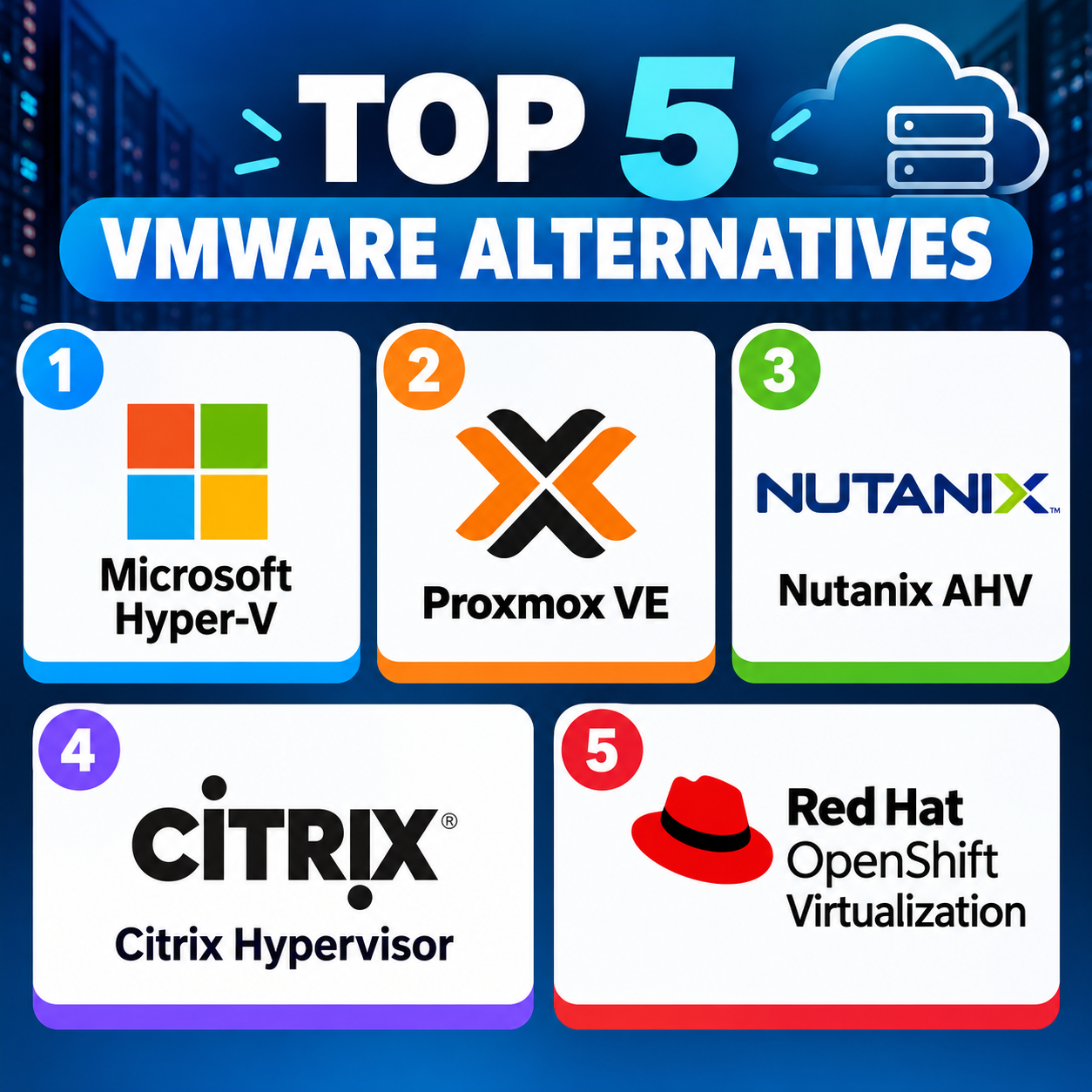
1. Microsoft Hyper-V is a strong choice for organizations heavily invested in Windows Server and the Microsoft ecosystem. It supports virtual machines running Windows and Linux and integrates closely with tools such as Windows Admin Center, Active Directory, and Azure. Best for: Windows-centric enterprises and organizations already using Microsoft infrastructure.
2. Proxmox VE Virtual Environment (VE) is an open-source virtualization platform combining KVM virtualization with LXC containers. It provides a web-based management interface and supports clustering, high availability, software-defined storage, and backup capabilities. One of its biggest advantages is its open-source model, which can make it attractive to organizations seeking greater control over infrastructure costs and vendor dependence. Best for: SMBs, labs, service providers, and organizations looking for an open-source VMware alternative.
3. Nutanix AHV is an enterprise hypervisor integrated into the Nutanix Cloud Platform. Rather than treating virtualization as a standalone product, Nutanix combines compute, storage, networking, and management into a hyperconverged infrastructure platform. AHV can be particularly appealing to organizations looking to simplify infrastructure management and consolidate virtualization and storage operations. Best for: Enterprises adopting hyperconverged infrastructure.
4. Citrix Hypervisor, based on the Xen virtualization technology, is designed for enterprise virtualization and workloads associated with Citrix’s broader application and desktop delivery ecosystem. It supports centralized management, high availability, and live migration. Organizations already using Citrix technologies may find it particularly relevant when considering alternatives to VMware. Best for: Enterprises running Citrix-focused virtual desktop and application environments.
5. Red Hat OpenShift Virtualization allows organizations to run traditional virtual machines alongside containers on the OpenShift platform. This approach can be useful for companies pursuing a gradual transition from conventional VM-based applications toward cloud-native workloads. Rather than replacing virtualization with containers, it provides a platform where both approaches can coexist. Best for: Organizations modernizing applications while continuing to operate existing virtual machines.
Which should you consider?
The right VMware alternative depends heavily on your existing infrastructure and priorities. Hyper-V fits naturally into Microsoft environments, Proxmox VE emphasizes openness and flexibility, Nutanix AHV focuses on hyperconverged infrastructure, Citrix Hypervisor suits Citrix-oriented deployments, while OpenShift Virtualization targets organizations combining VMs with Kubernetes and containers.