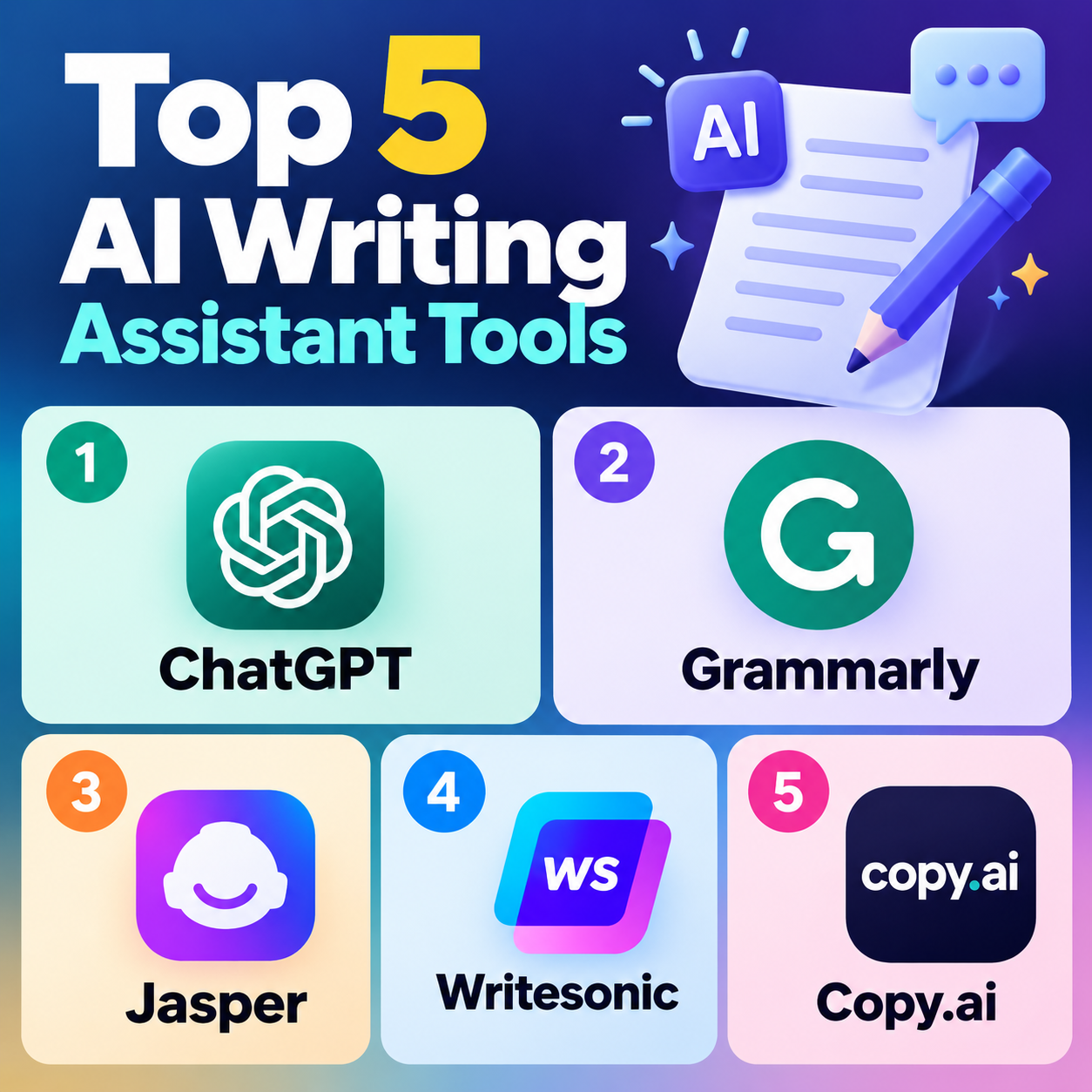
AI writing assistants have become useful for more than simply generating text. Modern tools can help with brainstorming, drafting, editing, grammar, tone, SEO, research, and adapting content for different audiences. Here are five strong options to consider in 2026.
1. ChatGPT is one of the most versatile AI writing assistants. It can generate drafts, rewrite existing content, summarize documents, brainstorm ideas, improve structure, translate text, and adapt writing to different audiences and tones. OpenAI specifically recommends a workflow of planning, drafting, revising, and packaging content for its writing capabilities. It is particularly useful when you need help with emails, reports, blog posts, essays, scripts, proposals, social media content, or creative writing. Its conversational approach also makes it easy to refine a draft through multiple rounds of feedback. Best for: Professionals, students, marketers, and general users.
2. Grammarly has evolved from a traditional grammar checker into a broader AI writing assistant. Its current tools can generate drafts, rewrite paragraphs, adjust tone, improve clarity, brainstorm ideas, and provide proofreading assistance. One major advantage is that Grammarly works across many apps and websites, making it convenient for emails, documents, messages, and other everyday communication. Its AI agents also include tools for paraphrasing, proofreading, and assessing how readers may react to writing. Best for: Business communication, students, professionals, and anyone who wants polished writing.
3. Jasper is designed particularly around business and marketing content. It supports content creation while allowing users to provide brand voice, audience information, and knowledge assets so generated material can remain consistent. Its editor can also improve, shorten, expand, summarize, and translate content. This makes Jasper especially relevant for marketing teams producing blog posts, campaigns, advertisements, website copy, and other branded content. Best for: Marketing teams, agencies, and businesses with established brand guidelines.
4. Writesonic focuses heavily on content marketing and search visibility. Its tools support long-form articles, rewriting, SEO optimization, brainstorming, and multiple content formats. Its newer Article Writer emphasizes research, citations, SEO keywords, and multi-stage content production. It is therefore a useful option for publishers, bloggers, and marketing teams that need to produce substantial volumes of web content. Best for: SEO specialists, bloggers, publishers, and content agencies.
5. Copy.ai is another strong option for businesses creating marketing and sales content. It is particularly useful for generating copy for campaigns, product messaging, sales communications, and other business workflows. Its strength is less about basic grammar correction and more about helping teams produce business-oriented content efficiently and consistently. Best for: Sales teams, marketers, startups, and content teams.
Conclusion
The right tool depends on your goal. ChatGPT offers broad writing flexibility, Grammarly excels at editing and communication, Jasper is geared toward branded marketing, Writesonic emphasizes SEO and web content, while Copy.ai focuses strongly on marketing and sales workflows. For many users, the best choice will depend less on which tool has the most features and more on the type of writing they produce most frequently.
Leave a Reply