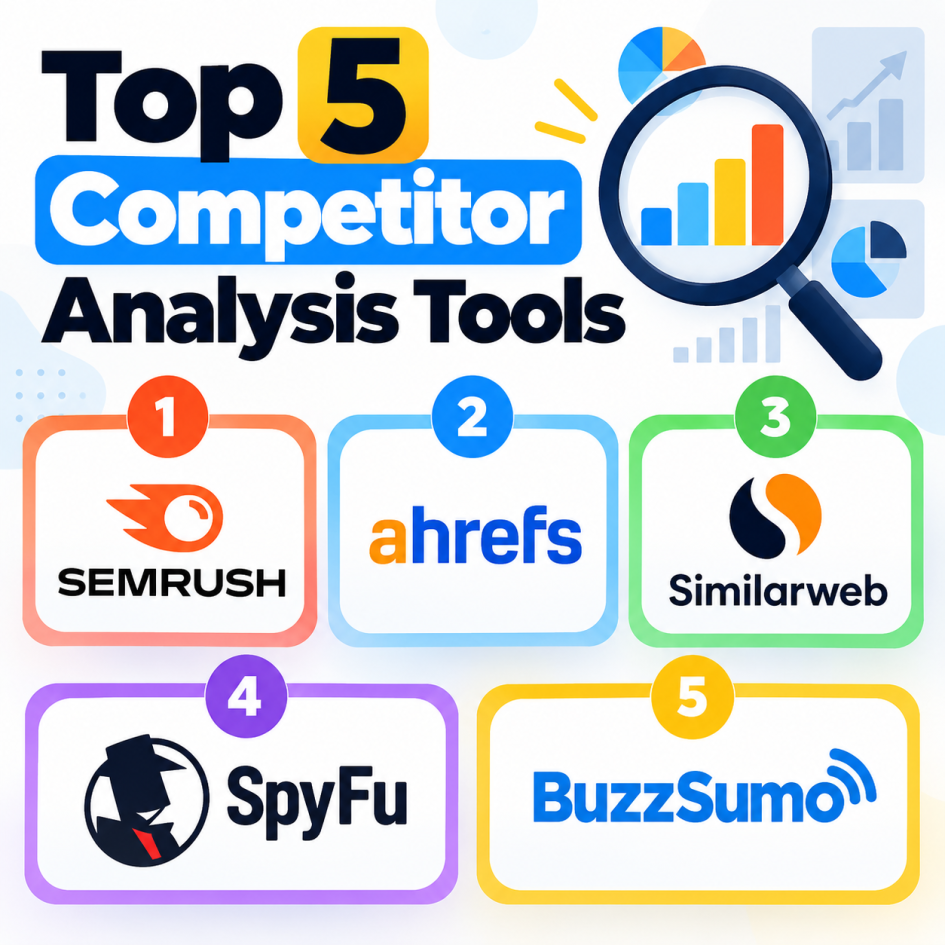
Top 5 Competitor Analysis Tools Competitor analysis tools help businesses understand rival companies, track market movements, identify customer acquisition strategies, and uncover opportunities for growth. From SEO and paid advertising to website traffic and social media, these platforms provide data that can support more informed marketing and business decisions.
1. Semrush is a comprehensive digital marketing platform with extensive competitor analysis capabilities. Businesses can research competitors’ organic search rankings, keywords, backlinks, paid search campaigns, and website performance. Its competitive research features make it possible to compare domains, identify keyword gaps, and discover areas where competitors are gaining visibility. Semrush is particularly useful for SEO teams, content marketers, and agencies conducting detailed search-market research.
2. Ahrefs provides competitor intelligence centered heavily around SEO and content performance. Users can examine competing websites’ backlink profiles, organic keywords, top-performing pages, and search traffic estimates. The platform’s Content Gap functionality can highlight keywords competitors rank for that a business may be missing. Ahrefs also provides tools for monitoring changes in search visibility, making it useful for ongoing competitive research rather than one-time analysis.
3. Similarweb focuses on digital market intelligence and website traffic analysis. Users can compare websites based on estimated traffic, engagement, traffic sources, geographic distribution, referral channels, and audience interests. This broader perspective can help businesses understand how competitors attract and engage visitors. Similarweb is also useful for researching market trends and benchmarking a company’s digital presence against other businesses in the same category.
4. SpyFu specializes in competitive search intelligence, particularly Google Ads and SEO research. Users can investigate competitors’ paid keywords, advertising history, organic rankings, and keyword strategies. Historical data can provide additional context by showing how competitors’ search strategies have changed over time. SpyFu can therefore help marketers identify potential keywords, understand advertising approaches, and evaluate the competitive landscape before launching or refining campaigns.
5. BuzzSumo takes a content-focused approach to competitor analysis. It allows marketers to research competitors’ most-shared content, identify influential authors and publications, monitor brand mentions, and discover emerging topics. Its content research capabilities can reveal which subjects and formats generate engagement across different platforms. This makes BuzzSumo useful for companies developing content strategies and looking for gaps in their competitors’ publishing activity.
Choosing a Competitor Analysis Tool The right tool depends on the type of competitive intelligence a business needs. Semrush and Ahrefs provide extensive SEO-focused research, while Similarweb offers a broader view of website traffic and digital markets. SpyFu concentrates on search advertising and keyword competition, whereas BuzzSumo emphasizes content performance and online engagement.