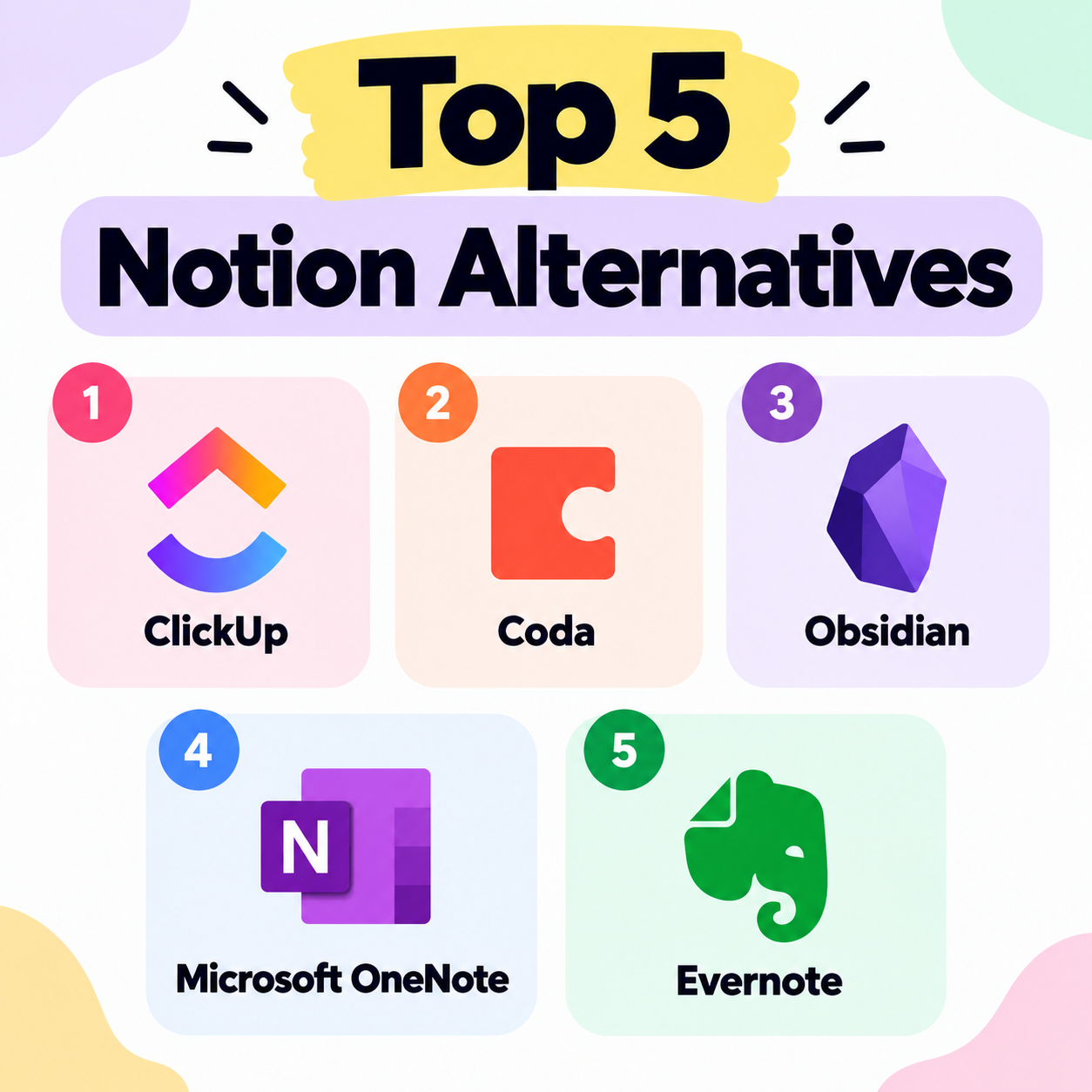
Notion has become a popular all-in-one workspace for notes, project management, documentation, databases, and team collaboration. However, its flexibility can sometimes feel overwhelming, and some users may prefer a tool designed around a more specific workflow. Whether you want stronger project management, better document collaboration, or a simpler note-taking experience, there are several Notion alternatives worth considering.
1. ClickUp is a powerful productivity and project management platform that combines tasks, documents, goals, dashboards, and team collaboration in one workspace. Compared with Notion, ClickUp places a stronger emphasis on project and task management. Users can organize work using lists, boards, calendars, Gantt charts, and custom workflows. It can be a good choice for teams that need detailed task tracking alongside documentation. Its extensive customization options also make it suitable for businesses managing complex projects.
2. Coda combines documents, spreadsheets, databases, and automation into flexible interactive workspaces. Like Notion, it allows users to build customized pages and databases, but it puts a particularly strong focus on turning documents into functional tools. For example, teams can create project trackers, meeting systems, product roadmaps, or approval workflows within a single document. Coda is worth considering if you want the flexibility of Notion with more spreadsheet-like functionality and automation.
3. Obsidian takes a different approach by focusing primarily on personal knowledge management and note-taking. Notes are stored as local Markdown files, giving users greater control over their data and making the platform particularly appealing to researchers, writers, students, and knowledge workers. Its linking and graph features make it easy to connect related ideas and build a personal knowledge base. While it does not aim to replace every project-management feature found in Notion, it can be an excellent alternative for users who primarily want a powerful note-taking system.
4. Microsoft OneNote is a long-established digital note-taking platform that works particularly well for users already invested in the Microsoft ecosystem. It supports notebooks, sections, pages, handwriting, multimedia, and collaboration. OneNote may be a better fit for people who want a straightforward digital notebook rather than an extensively customizable workspace. Its integration with other Microsoft products can also make it convenient for schools, workplaces, and organizations using Microsoft 365.
5. Evernote is another established alternative focused on organizing and retrieving information. It provides tools for capturing notes, documents, web content, images, and other information in one searchable system. Its strength is centered on note organization and information retrieval rather than building complex databases or project-management systems. For users looking for a dedicated note-taking application with a mature organizational structure, Evernote remains an option to consider.
Choosing the Right Notion Alternative
The best alternative depends on how you use your workspace. ClickUp is focused on project and task management, Coda emphasizes flexible documents and automation, Obsidian focuses on connected personal knowledge, OneNote provides a familiar digital notebook experience, and Evernote centers on capturing and organizing information. Before switching, consider which Notion features you rely on most. The right choice is less about finding a universal replacement and more about choosing a platform that matches your specific workflow.