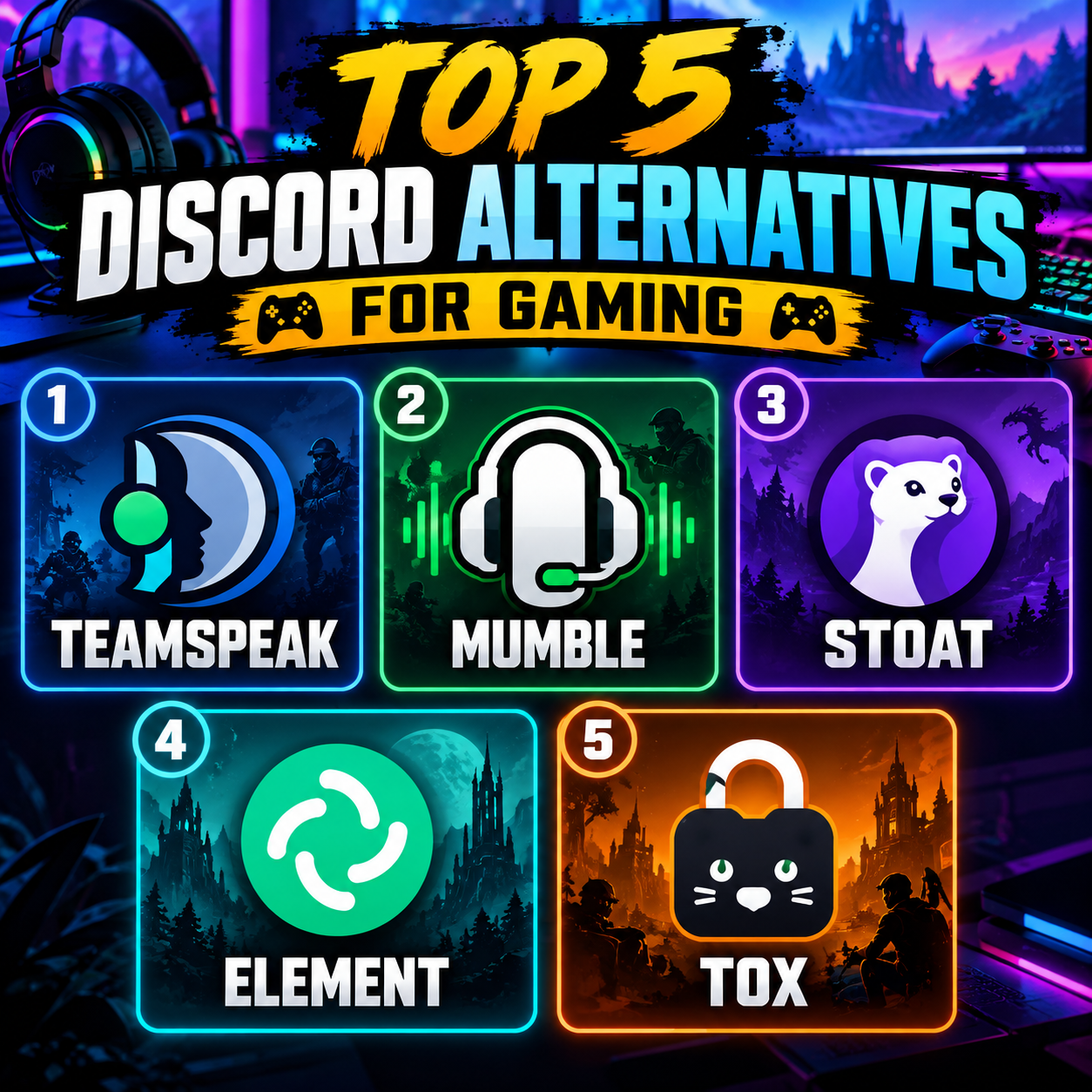
Discord remains one of the biggest communication platforms for gamers, but it is not the only option. Depending on whether you care most about low-latency voice chat, privacy, self-hosting, or a Discord-like community experience, several alternatives are worth considering in 2026.
1. TeamSpeak — Best for Competitive Gaming TeamSpeak remains a strong choice for esports teams, clans, and competitive players who prioritize reliable, low-latency voice communication. It offers dedicated servers, detailed permission controls, and high-quality voice chat. Unlike Discord, TeamSpeak is primarily focused on communication rather than being an all-in-one social platform. The main drawback is that setting up and managing servers can require more technical knowledge. Its text and community features are also less comprehensive than Discord’s.
2. Mumble — Best Open-Source Voice Chat Mumble is a free, open-source voice communication platform designed around low-latency audio. It can be self-hosted, giving gaming communities significantly more control over their servers and data. Its positional-audio capabilities can also be useful for games where knowing where another player is speaking matters. The downside is a less polished interface and fewer community-management features than Discord.
3. Stoat — Best Discord-Like Alternative Formerly known as Revolt, Stoat is an open-source group-chat platform built around servers, channels, voice chat, file sharing, roles, and moderation tools. Its interface and structure are designed to feel familiar to people coming from Discord. Stoat Stoat is particularly interesting for gamers who want a community platform rather than simply a voice-chat application. The project reported reaching one million registered users in March 2026.
4. Element — Best for Privacy and Decentralization Element uses the Matrix network, allowing communities to use different servers and participate in a decentralized communication ecosystem. Matrix supports public gaming rooms, and users can use Element through the web or mobile apps. matrix.org It is more technically complex than Discord, but it offers greater flexibility for communities that value control, federation, and privacy.
5. Tox is a peer-to-peer messaging platform designed around privacy and decentralized communication. Gamers can use it for encrypted text chat, voice and video calls, group conversations, file sharing, and screen sharing. Unlike Discord, Tox does not depend on centralized servers for its core communication.
The right choice depends on what matters most to your gaming group. Players who prioritize competitive voice communication may prefer a dedicated voice platform, while communities looking for greater privacy or control may find decentralized alternatives more suitable. As gaming communication platforms continue to evolve in 2026, these services give players several options beyond Discord.